
Contact Us Today!
Supreme Court Ruling Expands Accountability for Montana Truck Crash Victims: Freight Brokers Can Now Be Held Liable

In a unanimous decision handed down May 14, 2026, the United States Supreme Court ruled that freight brokers can be held liable under state law when they negligently hire unsafe carriers whose trucks cause serious injuries or death. The ruling in Montgomery v. Caribe Transport II, LLC represents a major victory for truck crash victims and fundamentally reshapes accountability in the commercial trucking industry.
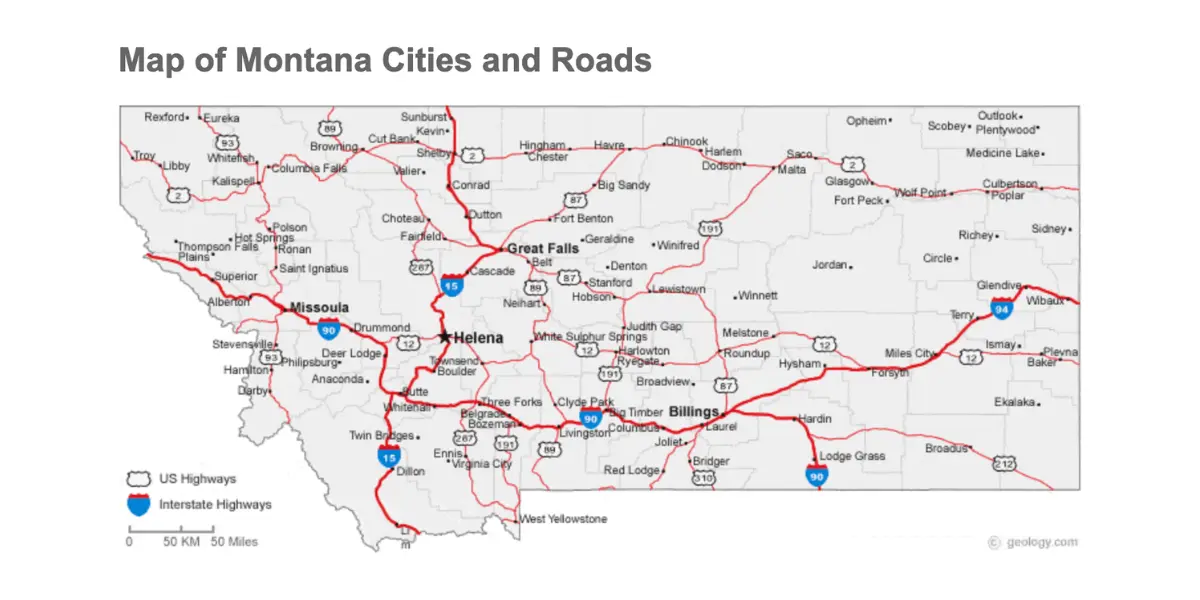
For Montana families who have lost loved ones or suffered catastrophic injuries in truck crashes on I-90, I-15, US-2, or Highway 93, this ruling means that brokers who put dangerous trucks on our roads can finally face consequences for their decisions.
As a Montana personal injury attorney who represents families devastated by serious truck crashes, I’m writing this to explain what the Supreme Court’s ruling means for injured victims, why freight brokers matter, and how this decision expands who can be held accountable when negligent hiring puts unsafe commercial vehicles on Montana’s highways.
What Freight Brokers Are and How They Shape the Trucking Industry
Before explaining the Court’s ruling, it’s important to understand what freight brokers do and why they play such a critical role in determining which trucks end up on our roads.
Think of freight brokers as matchmakers in the transportation industry. When a company needs to ship goods, they often hire a broker to find a trucking carrier to haul the load. The broker connects the shipper with the carrier, arranges the transportation, and collects a fee for the service.
According to federal transportation data, roughly 28,000 freight brokers arrange transportation for about one-third of all freight shipped in the United States by more than 780,000 carriers. These brokers make critical decisions about which trucking companies get hired to move goods across America’s highways, including Montana’s major freight corridors.
When brokers prioritize price over safety and hire carriers with poor safety records, dangerous trucks end up sharing the road with Montana families. Until this Supreme Court ruling, many brokers operated with little accountability for those hiring decisions.
Shawn Montgomery’s Story: A Parked Truck and a Life Forever Changed
The case that reached the Supreme Court began with a devastating crash in Illinois. Shawn Montgomery, a truck driver, had pulled his tractor-trailer onto the shoulder of the road when disaster struck. Another commercial truck veered off course and slammed into Montgomery’s stopped vehicle with catastrophic force.
The impact was so severe that Montgomery lost part of his leg. He sustained other permanent injuries that will affect him for the rest of his life. The truck that hit him was driven by Yosniel Varela-Mojena, who was hauling a load of plastic pots for motor carrier Caribe Transport II, LLC.
Freight broker C.H. Robinson Worldwide, Inc. had coordinated the shipment and hired Caribe Transport to haul the load.
Montgomery filed a lawsuit arguing that C.H. Robinson was negligent in selecting Caribe Transport as the carrier. At the time C.H. Robinson hired them, Caribe Transport had a “conditional” safety rating from the Federal Motor Carrier Safety Administration. According to the lawsuit, the company had been cited for deficiencies in driver qualification, hours of service compliance, vehicle inspection and maintenance, and a troubling recordable crash rate.
Based on this safety record, Montgomery claimed that C.H. Robinson knew or should have known that hiring Caribe Transport to move goods was reasonably likely to result in crashes that would injure others.
The Legal Battle Over Federal Preemption
C.H. Robinson’s defense relied on a federal law called the Federal Aviation Administration Authorization Act (FAAAA). This law broadly prohibits states from regulating the prices, routes, and services of motor carriers and brokers “with respect to the transportation of property.”
The broker argued that because trucking is federally regulated, it should be shielded from lawsuits under state law. Both the District Court and the Seventh Circuit Court of Appeals agreed, ruling that federal law preempted Montgomery’s negligent hiring claim against the broker.
But the FAAAA contains an important exception known as the “safety exception.” This provision states that the federal preemption “shall not restrict the safety regulatory authority of a State with respect to motor vehicles.”
Montgomery appealed to the Supreme Court, arguing that his negligent hiring claim fell within this safety exception and should not be preempted. The question before the Court was whether a claim that one company negligently hired another to transport goods is “with respect to motor vehicles” under the safety exception.
The Supreme Court’s Unanimous Decision
Writing for a unanimous Court, Justice Amy Coney Barrett delivered a straightforward ruling in favor of Montgomery. The Court held that requiring brokers to exercise reasonable care in selecting carriers “concerns” motor vehicles and therefore falls within the FAAAA’s safety exception.
“Applying that interpretation here is straightforward,” Justice Barrett wrote. “Montgomery alleges that C.H. Robinson failed to exercise reasonable care when it hired Caribe Transport, which had a subpar safety rating from federal regulators, to transport goods via truck.”
The Court concluded that requiring C.H. Robinson to exercise ordinary care in selecting a carrier “concerns motor vehicles – most obviously, the trucks that will transport the goods.”
The ruling makes clear that while federal law preempts state regulation of broker prices, routes, and services, it does not shield brokers from state tort liability when they negligently hire unsafe carriers. Common-law duties of reasonable care remain part of a state’s authority to regulate safety “with respect to motor vehicles.”
Why This Ruling Matters for Montana Truck Crash Victims
Montana’s highways carry enormous volumes of commercial freight traffic. Interstate 90 spans over 550 miles across Montana, connecting Billings, Bozeman, Butte, and Missoula. Interstate 15 runs 396 miles from the Idaho border to Canada, passing through Butte, Helena, and Great Falls. US Route 2, known as the Hi-Line, runs parallel to the Canadian border across Montana’s northern tier. Highway 93 serves as a critical north-south corridor from Eureka near the Canadian border south through the Flathead Valley, Missoula, and into Idaho.
These routes facilitate the movement of agricultural products, energy resources, manufactured goods, and consumer products. According to freight industry data, trucking handled 72.2% of freight tonnage in Montana in 2023, with $6.1 billion in goods crossing the Montana-Canada border annually.
But this heavy commercial traffic comes with serious safety risks. The Montana Department of Transportation reported 711 large truck accidents in 2023. Of these crashes, 18 were fatal, resulting in 27 deaths, and another 227 caused injuries. Montana ranks fourth in the nation for truck fatalities per capita, with a rate nearly three times higher than the national average.
When brokers hire carriers with poor safety records, they contribute to these devastating crashes. The Supreme Court’s ruling means that Montana truck crash victims can now pursue claims against brokers who negligently put unsafe trucks on our roads.
Expanding the Chain of Accountability
Before this ruling, injured victims could typically only sue the truck driver and the trucking company that employed them. Brokers operated largely free from tort liability, even when they made hiring decisions that should have raised red flags about safety.
The Supreme Court’s decision fundamentally expands who can be held accountable when truck crashes occur:
The Driver: If the driver was speeding, fatigued, distracted, impaired, or otherwise negligent, they can be held liable for the crash.
The Trucking Company: The motor carrier can be held liable for negligent hiring, inadequate driver training, failing to maintain vehicles, pressuring drivers to violate hours-of-service rules, or other safety failures.
The Freight Broker: Now, under this ruling, the broker who selected the carrier can be held liable if they failed to exercise reasonable care in vetting the carrier’s safety record before arranging the shipment.
This expanded accountability is particularly important in cases where the trucking company has minimal insurance coverage or limited assets. Identifying all potentially liable parties maximizes the available compensation sources for victims facing catastrophic injuries.
What Constitutes Negligent Hiring by a Broker
The Supreme Court’s ruling doesn’t mean that brokers will automatically be liable whenever a truck they arranged transportation for causes a crash. Rather, it means that brokers can be sued under state tort law if they negligently selected an unsafe carrier.
Federal safety databases maintained by the Federal Motor Carrier Safety Administration provide brokers with tools to evaluate carrier safety. These databases track violations, crash rates, and overall safety ratings. Carriers with conditional or unsatisfactory safety ratings, patterns of serious violations, or poor crash records present obvious warning signs that should influence hiring decisions in commercial truck accident cases.
A broker who ignores these red flags and hires a carrier with a documented history of safety problems may be liable if that carrier’s truck causes a crash. As Justice Barrett wrote, requiring brokers to exercise “ordinary care in selecting a carrier” is exactly what the FAAAA’s safety exception preserves.
Conversely, brokers who carefully vet carriers, check safety records, and hire companies with solid safety histories should be able to defend successfully against negligent hiring claims.
Common Contributing Factors in Montana Truck Crashes
Montana’s challenging driving conditions and heavy commercial traffic create multiple risk factors for serious truck crashes:
Driver Fatigue: Federal regulations limit truck drivers to 11 hours of driving within a 14-hour work period, but enforcement on Montana’s remote highways can be challenging. Fatigued drivers have slower reaction times, impaired judgment, and may experience microsleep episodes. The National Highway Traffic Safety Administration tracks commercial vehicle safety data and enforces federal motor vehicle safety standards.
Inadequate Vehicle Maintenance: Brake failures, tire blowouts, and other mechanical problems contribute to crashes when carriers cut corners on maintenance. The FMCSA safety ratings flag carriers with poor maintenance records.
Improper Cargo Loading: Improperly loaded or unsecured cargo can shift during transport, causing the truck to become unstable or cargo to spill onto the roadway.
Weather Conditions: Montana’s harsh winters create hazardous conditions. Ice, snow, and high winds demand that drivers adjust speed and driving practices, yet some carriers pressure drivers to maintain schedules regardless of conditions.
Speed and Following Distance: Commercial trucks weighing up to 80,000 pounds require much longer stopping distances than passenger vehicles. Speeding or following too closely dramatically increases crash risk.
When brokers hire carriers with documented problems in any of these areas, they put every vehicle sharing Montana’s highways at risk.
Your Rights After a Serious Montana Truck Crash
If you or a loved one has been seriously injured in a crash involving a commercial truck on Montana’s highways, you have rights under Montana law. The state operates under a fault-based system, meaning that when someone causes a crash through negligence, they are financially responsible for the resulting damages.
Economic Damages you may recover include all medical expenses (emergency treatment, surgery, hospitalization, rehabilitation, and future medical needs), lost wages and benefits, future lost earning capacity if injuries prevent you from working, and out-of-pocket expenses related to your injuries.
Non-Economic Damages may include compensation for pain and suffering, emotional distress, loss of enjoyment of life, permanent disability or disfigurement, and loss of consortium for your spouse.
Montana law generally gives you three years from the date of injury to file a personal injury lawsuit under Montana Code Annotated § 27-2-204. However, the clock may start differently in some circumstances, and certain exceptions can shorten or extend this deadline. Don’t let these timelines create a false sense of security. Evidence preservation begins immediately after a crash, and trucking companies and their insurers start building their defense right away.
Investigating Broker Involvement in Truck Crashes
The Supreme Court’s ruling means that thorough investigation of truck crashes must now include examining the broker’s role. This investigation involves:
Identifying the Broker: Determining which company arranged the transportation and hired the carrier.
Obtaining Safety Records: Pulling the carrier’s FMCSA safety rating, inspection history, crash data, and violation records from the time the broker made the hiring decision.
Examining the Broker’s Vetting Process: Discovering what due diligence the broker performed before hiring the carrier and whether they ignored obvious warning signs.
Documenting the Hiring Decision: Obtaining contracts, communications, and internal documents showing how and why the broker selected this particular carrier.
Assessing Available Insurance: Identifying all potentially liable parties and their insurance coverage to maximize available compensation.
This investigation requires experience with federal motor carrier regulations, access to safety databases, and understanding of how the broker industry operates.
How Bliven Law Firm Can Help Montana Truck Crash Victims
At Bliven Law Firm, we represent Montana families throughout the state in serious truck accident cases. The Supreme Court’s ruling adds an important tool to our ability to pursue justice for catastrophically injured victims.
We understand federal motor carrier safety regulations, how to investigate broker involvement, and how to identify all potentially liable parties in complex commercial vehicle crashes. These cases often involve:
- Multiple defendants (driver, carrier, broker, and potentially others)
- Catastrophic injuries requiring lifetime care
- Disputes over liability and causation
- Insurance companies working to minimize payouts
- Complex federal and state regulations
We work on a contingency fee basis, meaning you pay nothing unless we recover compensation for you. This eliminates the financial barrier to getting experienced legal representation when you need it most. Medical, wage, and hardship advances may be available to help you access the care you need while your case is pending.
The Broader Impact on Trucking Industry Safety
While this ruling expands liability for brokers, its broader goal is to improve safety. When brokers know they can be held accountable for negligently hiring unsafe carriers, they have a powerful incentive to take safety seriously in their hiring decisions.
The families who shared their stories in the case leading to this ruling made this point clear. Alicia LaJeunesse, whose sister Nicole Gregory was among five people killed in a Texas truck crash involving a carrier with a history of safety violations, told reporters, “Where is the justice? Where’s the accountability to make sure brokers actually follow the rules?”
Angela Sims-Fuelling, whose husband was killed when a commercial truck slammed into stopped traffic, said of the broker, “They’re the ones who put that truck on the road.”
These families aren’t just seeking compensation for their losses. They want systemic change that prevents other families from experiencing similar devastation.
What This Means Going Forward
The Supreme Court’s unanimous decision sends a clear message: economic deregulation of the trucking industry does not mean deregulation of safety. States retain authority to impose common-law duties of care on brokers who make decisions about which carriers transport goods on our highways.
Brokers will need to implement robust safety vetting procedures, check federal safety databases, and refuse to hire carriers with poor safety records, even if they offer lower prices. Those who cut corners on safety to maximize profit margins can now be held liable when their decisions result in crashes that injure or kill others.
For Montana families who have suffered the devastating consequences of truck crashes, this ruling provides an additional avenue for accountability and compensation. It recognizes that responsibility for highway safety extends beyond the driver and trucking company to include the brokers who decide which trucks get put on the road.
Take Action After a Montana Truck Crash
If you or a loved one has been seriously injured in a crash involving a commercial truck on Montana’s highways, time is critical. Evidence can be lost, witnesses’ memories fade, and legal deadlines approach. The broker who arranged the transportation may have played a role in putting an unsafe truck on the road, but identifying broker involvement requires prompt investigation.
Contact Bliven Law Firm for a free, confidential consultation. We serve families throughout Montana, including those injured on I-90, I-15, US-2, Highway 93, and other major trucking corridors. As Montana personal injury attorneys dedicated to protecting Montana families, we’re here to listen to your story, answer your questions, and help you understand your options.
The Supreme Court took a major step on May 14, 2026 toward greater accountability in the trucking industry. Now it’s time to ensure that Montana victims get the justice and compensation they deserve as they work toward recovery.
Let Our Team Be Your Advocates
If you have been injured by a car wreck or suffered any type of serious injury, call our Kalispell personal injury lawyers at 406-755-6828 or fill out the
no-obligation online case form. We will respond promptly. When you hire our firm you will have the confidence of knowing that assisting you and resolving your
situation and claim is our priority. Contact us for your free case evaluation today.

Kalispell Office
704 South Main Street
Kalispell, MT 59901
Boardman Office
202 North Main Street
Suite 1
Boardman, OR 97818
Phone Number 406-755-6828
Follow Us
© Copyright 2026 Bliven Law Firm, P.C. All Rights Reserved.
Digital Marketing By: 
*Images are obtained under license from Canva and other third-party stock image providers, with attribution included where required.