
Contact Us Today!
Major Victory: Montana Judge Allows PFAS Firefighter Gear Lawsuit to Move Forward Against Industry Giants
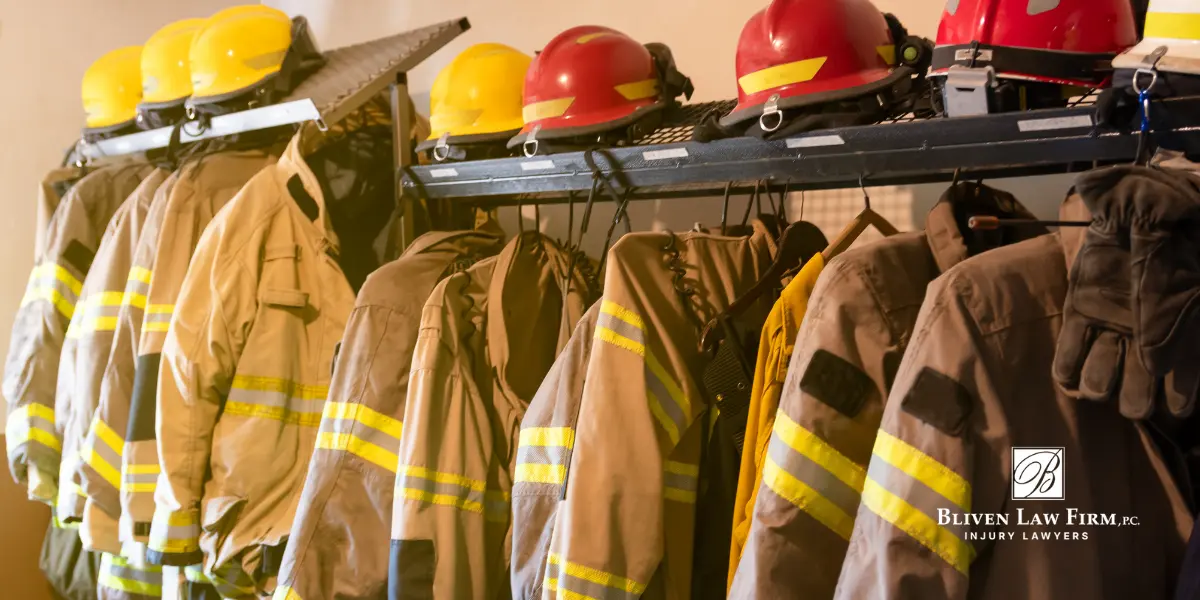
As a Montana personal injury attorney, I’m proud to share news of a significant legal victory in our ongoing fight to hold some of the nation’s largest corporations accountable for exposing American firefighters to toxic chemicals. On January 6, 2026, U.S. District Judge Brian Morris denied all motions to dismiss a class-action lawsuit that Bliven Law Firm, working alongside nationally preeminent co-counsel Steve Berman at Hagens Berman and John Heenan at Heenan & Cook, filed on behalf of Butte-Silver Bow against DuPont/Chemours, 3M, and other manufacturers of “forever chemicals” used in firefighter turnout gear.
Judge Morris’s comprehensive 50-page ruling means this case moves forward to discovery, where we’ll uncover what these corporations knew about the cancer risks of PFAS chemicals and when they knew it. For Butte-Silver Bow’s firefighters who have been wearing contaminated gear – and for fire departments across Montana and America – this decision brings us one step closer to justice and safer equipment.
What We’re Fighting For
Let me explain what this lawsuit is really about. Butte-Silver Bow filed this nationwide class-action lawsuit on April 3, 2025, seeking to represent fire departments across America that purchased protective firefighter gear containing dangerous chemicals called PFAS (per- and polyfluoroalkyl substances). These are the suits firefighters wear when rushing into burning buildings, the gear they trust with their lives.
Butte-Silver Bow currently owns approximately 400 sets of turnout suits to protect its firefighters and volunteers. According to our complaint, the county purchased this gear from manufacturers Globe and Lion between 2008 and 2024, trusting that this protective equipment was safe. Now we’ve learned it contains toxic PFAS chemicals, and Butte-Silver Bow faces replacing all 174 fire suits at approximately $4,000 each – a cost of roughly $700,000.
This lawsuit focuses on economic damages – the cost of replacing defective, contaminated gear that fire departments purchased in good faith. We’re asking corporations to pay for what was their responsibility to provide safely in the first place: protective equipment that actually protects, not equipment that exposes firefighters to carcinogens.
The Defendants and the PFAS Supply Chain
Our lawsuit targets the entire supply chain that brought PFAS into firefighters’ protective gear:
The Chemical Manufacturers: 3M Company and DuPont (including Chemours, Corteva) allegedly manufactured the PFAS chemicals. According to our complaint, 3M was a dominant global producer of PFAS, while DuPont allegedly invented PTFE and was once the world’s largest chemical company.
The Materials Manufacturer: W.L. Gore & Associates allegedly used PFAS from 3M and DuPont to make components and technical fabrics for firefighter gear.
The Gear Manufacturers: Globe Manufacturing and Lion Group allegedly incorporated these PFAS-containing materials into the finished turnout gear and sold it directly to fire departments like Butte-Silver Bow.
According to our allegations, the PFAS moved from 3M and DuPont → to Gore → to Globe and Lion → and ultimately onto the backs of Montana firefighters who had no idea they were being exposed to toxic chemicals every time they suited up.
Judge Morris’s Key Findings
Judge Morris didn’t just say “yes, the case can proceed.” He systematically addressed and rejected every argument the defendants made for dismissal. Let me walk you through the key findings.
Standing to Sue: The Causal Chain Holds
The defendants argued that Butte-Silver Bow lacked legal standing because the county didn’t purchase PFAS directly from companies like 3M and DuPont – there were intermediaries in the supply chain. Judge Morris rejected this decisively.
The court found that traceability doesn’t require showing proximate causation. It only requires that “the line of causation between the defendant’s action and the plaintiff’s harm” be “more than attenuated.” Judge Morris noted it would be impossible for Butte-Silver Bow to scientifically test products and determine their exact chemical source before bringing a claim. The court reasonably could infer that “much of the PFAS found within the turnout gear came from PFAS manufactured by 3M and DuPont.”
As Judge Morris wrote: “The Complaint draws a clear line of traceability” to all defendants in the supply chain.
Personal Jurisdiction: Active Marketing Into Montana
The defendants claimed Montana courts lacked jurisdiction over them. Judge Morris found otherwise, documenting extensive contacts between defendants and Montana, including:
- 3M held the “3M Scott Firefighter Combat Challenge” in Big Sky, Montana on August 13-14, 2021, promoting and marketing its products
- 3M, Lion, and Globe participated in events in Butte, Montana in October 2025 where they sold firefighter products
- Marketing and sales solicitations received by Butte-Silver Bow officials from company representatives
- DuPont and Globe held an annual giveaway for turnout gear, with Montana fire departments winning gear sets that were shipped to Montana
- Direct sales and distributors operating in Montana
Judge Morris concluded these contacts proved “sufficient to establish Defendants’ purposeful availment to Montana.” The defendants didn’t just let products drift into Montana – they “made efforts to market, sell, and advertise their products into Montana.”
Why Montana Instead of Connecticut
A similar lawsuit was filed in Connecticut in June 2024, before Montana’s case. The defendants argued Montana’s case should be dismissed in favor of Connecticut. Judge Morris declined, finding critical differences:
Our case includes RICO claims and state consumer protection claims that aren’t in the Connecticut lawsuit. These additional claims mean resolution only under Connecticut’s lawsuit “would leave portions of Plaintiff’s case unresolved.” Montana’s case is also procedurally ahead – Judge Morris held a hearing in December 2025 and issued his ruling, while Connecticut’s court hasn’t yet held a hearing on their motions to dismiss.
As Judge Morris wrote: “Judicial efficiency and the interests of justice would be better served by maintaining this pending action in the District of Montana.”
The RICO Claims: Corporate Conspiracy Allegations
One of the most powerful aspects of our lawsuit involves RICO claims – the federal Racketeer Influenced and Corrupt Organizations Act. While most people associate RICO with prosecuting organized crime, it also applies to patterns of corporate fraud and racketeering – and that’s exactly what we’re alleging here.
Our complaint doesn’t just claim the defendants individually failed to warn about PFAS dangers. We’re alleging they worked together as an enterprise to conceal known dangers from the public and fire departments. According to our allegations:
- Each defendant knew about the dangers of PFAS and actively hid those dangers for decades
- 3M shared knowledge with DuPont by providing a Material Safety Data Sheet in 1997 that noted PFAS’s cancer risks
- Defendants collaborated in joint studies about PFAS dangers
- Despite this knowledge, defendants continued marketing PFAS and PFAS-containing turnout gear as safe for decades
Judge Morris found these allegations sufficient to proceed. As he wrote, “such joint concealment cannot simply be ordinary business.” The court found we sufficiently alleged defendants worked together because “Defendants could not have achieved their goals of selling PFAS and turnout gear containing PFAS if Defendants’ knowledge of the harms of PFAS had been exposed.”
The alleged concealment wasn’t a one-time event but “ongoing and continuous” – Butte-Silver Bow purchased turnout gear from 2008 to 2024 without knowledge of PFAS harms, suggesting defendants continued their concealment throughout this entire period.
Understanding PFAS and the Dangers to Firefighters
PFAS are man-made chemicals manufactured since the 1940s. They’re called “forever chemicals” because they don’t break down in the environment and accumulate in human bodies over time. According to the Centers for Disease Control and Prevention, PFAS have been found in the blood of nearly all Americans.
PFAS resist heat, water, and oil – properties that made them seem perfect for firefighter gear. But these same properties make them dangerous.
The Environmental Protection Agency notes that PFAS exposure has been linked to various types of cancer (including kidney and testicular cancer), liver damage, immune system suppression, thyroid disease, and developmental issues in children. The International Agency for Research on Cancer classified PFOA (perfluorooctanoic acid), one type of PFAS, as a human carcinogen.
For firefighters specifically, the risk is magnified. They’re exposed to PFAS from their protective gear worn directly against their skin. Studies show firefighters face double the rate of testicular cancer compared to the general population. When firefighters suit up in turnout gear containing PFAS, they’re wrapping themselves in a source of continuous chemical exposure during the very moments they’re working to save lives.
What Happens Next in Discovery
With Judge Morris denying all motions to dismiss, our case now moves into what I consider the most important phase: discovery. This is when we can demand documents, take depositions under oath, and gather the evidence that will prove our case.
Based on the allegations in our complaint, discovery should potentially reveal:
- Internal corporate documents showing what 3M, DuPont, Gore, Globe, and Lion knew about PFAS health risks and when they knew it
- The 1997 Material Safety Data Sheet 3M allegedly shared with DuPont noting PFAS’s cancer risks
- Scientific studies conducted or commissioned by defendants about PFAS toxicity, including studies they may have chosen not to publish
- Marketing materials showing how defendants promoted PFAS and PFAS-containing gear as safe despite knowing about health risks
- Supply chain documentation proving exactly which PFAS chemicals from which manufacturers ended up in which gear
- Communications between defendants potentially showing coordination in concealing PFAS dangers
While exact timelines vary, discovery in complex class-action cases typically takes 12-18 months or longer. After discovery, the case would move toward class certification, summary judgment motions, and potentially trial – though many cases settle after discovery reveals key evidence.
Why This Matters for Montana Fire Departments
When I think about this case, I think about small volunteer fire departments across Montana – places where fundraisers and community donations keep the trucks running and the gear current. This lawsuit is about accountability that reaches far beyond Butte-Silver Bow.
For smaller Montana fire departments, especially volunteer departments in rural communities, the cost of replacing contaminated gear could be devastating. Many operate on shoestring budgets, relying on local donations. The prospect of replacing their entire stock of turnout gear at $4,000 per suit could force impossible choices about protection and coverage.
If we prevail, this lawsuit could force fundamental changes in how firefighter protective gear is manufactured nationwide – elimination of PFAS from turnout gear entirely, clear warning requirements about exposure risks, regular testing and disclosure of chemical content, and new industry accountability standards.
How Bliven Law Firm Can Help
As a Montana personal injury attorney committed to holding corporations accountable for exposing families and workers to dangerous chemicals, I’m honored to be part of this fight alongside Butte-Silver Bow and our co-counsel. But this case represents just one battle in a larger war for corporate accountability.
If You’re Connected to Montana Firefighting
If you’re a Montana firefighter, volunteer firefighter, or work for a Montana fire department that purchased turnout gear over the past decade, this case could directly affect you. While Butte-Silver Bow is leading the charge, other Montana departments might benefit when we achieve class certification.
If You’ve Been Exposed to PFAS
PFAS contamination extends beyond firefighter gear. Montana families may have PFAS exposure from contaminated drinking water (particularly near former military bases or industrial sites), consumer products treated with PFAS, workplace exposure in various industries, or environmental contamination. If you believe you or your family has been harmed by PFAS exposure, it’s important to understand your legal rights.
Taking the Next Step
If you’re concerned about PFAS exposure affecting you, your family, or your fire department, I encourage you to reach out. Evidence can be lost, witnesses’ memories fade, and legal deadlines called statutes of limitations can expire.
Contact Bliven Law Firm at 406-755-6828 or fill out our online contact form to schedule a free consultation. As a Montana personal injury attorney dedicated to protecting Montana families from corporate negligence, I’m here to listen to your story, evaluate your situation, and help you understand your options.
Judge Morris’s ruling proves that Montana courts are willing to hold even the largest corporations accountable when they prioritize profits over safety. Montana firefighters risk their lives to protect our communities every single day. They deserve protective gear that actually protects them – not gear that exposes them to cancer-causing chemicals. And when manufacturers knew about these dangers and allegedly concealed them for decades, they deserve to be held accountable for every dollar it costs to make things right.
That’s what we’re fighting for. That’s what this victory means. And that’s why Bliven Law Firm will keep fighting alongside Butte-Silver Bow until justice is served.
Kalispell Office
704 South Main Street
Kalispell, MT 59901
Boardman Office
202 North Main Street, Suite 1
Boardman, OR 97818
Let Our Team Be Your Advocates
If you have been injured by a car wreck or suffered any type of serious injury, call our Kalispell personal injury lawyers at 406-755-6828 or fill out the
no-obligation online case form. We will respond promptly. When you hire our firm you will have the confidence of knowing that assisting you and resolving your
situation and claim is our priority. Contact us for your free case evaluation today.

Kalispell Office
704 South Main Street
Kalispell, MT 59901
Boardman Office
202 North Main Street
Suite 1
Boardman, OR 97818
Phone Number 406-755-6828
Follow Us
© Copyright 2026 Bliven Law Firm, P.C. All Rights Reserved.
Digital Marketing By: 
*Images are obtained under license from Canva and other third-party stock image providers, with attribution included where required.