
Contact Us Today!
Rolling Stone Exposes Oregon Water Crisis: Michael Bliven Co-Counsels Landmark Case Against Amazon
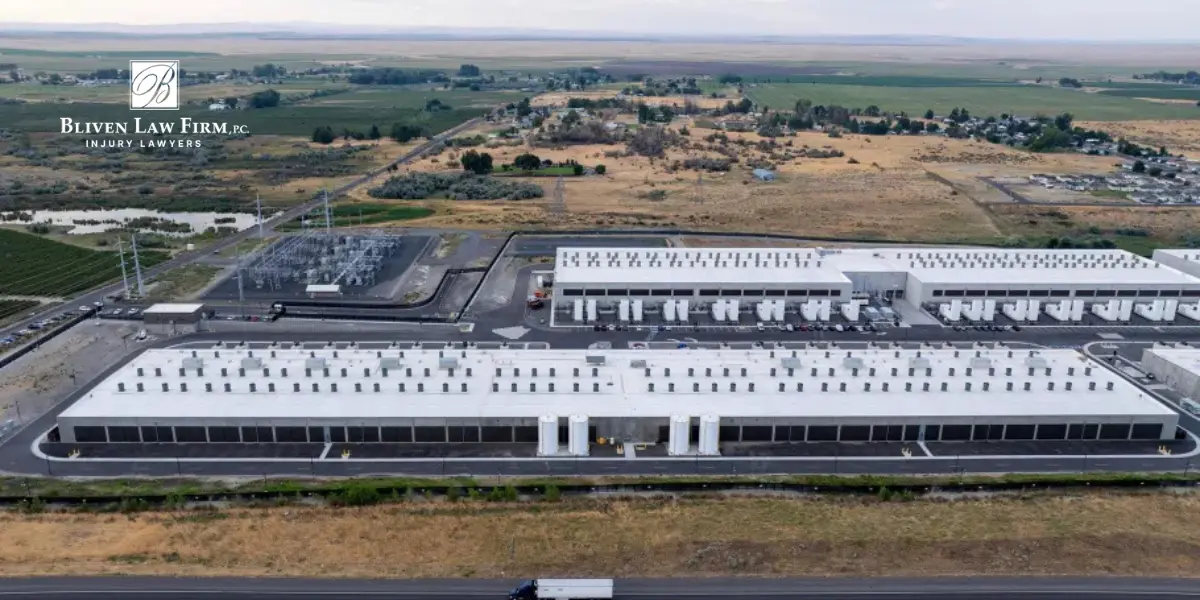
As a Montana personal injury attorney, I read with great interest a recent Rolling Stone investigation that exposed a devastating water contamination crisis in Oregon – one that hits particularly close to home because Michael Bliven of Bliven Law Firm is part of the legal team fighting for justice in this case. The article, titled “The Precedent Is Flint: How Oregon’s Data Center Boom Is Supercharging a Water Crisis,” details how Amazon’s data centers in Morrow County, Oregon, have contributed to widespread nitrate contamination that has left thousands of residents drinking poisoned water.
This isn’t just an Oregon problem. The story of Morrow County serves as a warning for communities across the country – including here in Montana – about what can happen when corporations prioritize profits over people’s health and safety. As someone who has spent years representing families harmed by corporate negligence, I’m proud that Michael Bliven is standing up for these victims alongside lead attorney Steve Berman in a federal class action lawsuit.
The Water Crisis: A Community Poisoned
The situation in Morrow County, Oregon, is nothing short of a public health catastrophe. According to the Rolling Stone investigation, a former county commissioner named Jim Doherty tested 76 residential wells in 2022 and found that 74 of them – more than 97% – violated federal safety standards for nitrate contamination. The EPA’s maximum contaminant level for nitrates is 10 parts per million (ppm), yet some wells in Morrow County tested as high as 73 ppm – more than seven times the legal limit.
The contamination didn’t happen overnight. For decades, industrial agriculture operations in Morrow County have used chemical fertilizers intensively, creating runoff that seeps into the Lower Umatilla Basin aquifer – the sole source of drinking water for up to 45,000 residents. Since 1991, Oregon’s Department of Environmental Quality has documented a slow but steady increase in nitrate levels in the groundwater.
Then Amazon arrived. Beginning in 2011, the tech giant built seven massive data centers in the area, with plans for five more. These facilities require tens of millions of gallons of water annually to cool their computer servers. That water, now contaminated with nitrates, flows into a wastewater system that recycles it back onto farmland, where the nitrates leach through the porous soil and back into the aquifer – a vicious cycle that has supercharged the contamination problem.
Understanding Nitrate Contamination and Health Risks
Nitrates in drinking water pose serious health threats, particularly to vulnerable populations. The EPA established the 10 ppm limit specifically to prevent methemoglobinemia, commonly known as “blue baby syndrome,” which occurs when nitrates interfere with blood’s ability to carry oxygen. This condition can be fatal to infants.
But the dangers extend far beyond babies. Research has linked nitrate exposure to increased risks of cancer, thyroid disease, and reproductive problems. The Rolling Stone article documented heartbreaking stories from Morrow County residents:
- At least 25 miscarriages reported within the first 30 homes surveyed
- Multiple residents living with only one kidney due to organ failure
- A 60-year-old man who developed throat cancer despite never smoking – a type of cancer typically seen only in smokers
One resident, Kathy Mendoza, told reporters her well water tested at 55.7 ppm – more than five times the legal limit. She believes her debilitating joint and muscle condition was caused by years of nitrate exposure. “How can you live with yourself knowing that the water you put in people’s houses is causing miscarriages or cancer?” she asked. “And they’re still making money on deals for new data centers.”
The Environmental Working Group warns that even low-level chronic exposure to nitrates may pose cancer risks and reproductive harm at levels far below the current EPA standard. Some researchers suggest a truly protective level would be 70 times lower than the current federal limit.
Amazon’s Role in the Crisis
While agricultural operations created the baseline contamination problem, Amazon’s data centers significantly exacerbated the crisis. Here’s how: Data centers consume enormous volumes of water to cool their servers, which must be kept at 70 to 80 degrees Fahrenheit to operate effectively. When Amazon’s facilities draw water from the already-contaminated aquifer – sometimes with nitrate levels as high as 13 ppm – and run it through their cooling systems, some water evaporates but the nitrates remain, concentrating the contamination. The wastewater discharged back into the system can average as high as 56 ppm – eight times Oregon’s safety limit.
This contaminated water then flows to the Port of Morrow, which manages wastewater for the area’s industrial operations. The Port sprays millions of gallons of this nitrogen-laden water back onto farmland as “recycled fertilizer.” While some nitrates are absorbed by crops, the sandy soil can’t hold it all, and the excess leaches directly into the aquifer below.
Chad Gubala, a hydrologist who oversaw Oregon DEQ’s monitoring of the Port’s wastewater permit, explained to Rolling Stone: “The aquifer is basically one giant sandbox, and the water flows through there very quickly.” The more contaminated water the Port sprays over the fields, the faster nitrates are driven through the soil and into the drinking water supply.
Despite this clear connection, Amazon has consistently downplayed its role in the crisis. In response to Rolling Stone’s investigation, the company claimed the region’s groundwater problems “significantly predate AWS’ presence” and that their water use represents “only a very small fraction of the overall water system.”
However, internal Amazon emails obtained through public records requests reveal a different story. Company officials debated whether to contribute to emergency relief efforts, with one director writing that there was “always potential for some risk of affiliation with the causation.” The emails also showed Amazon using the water crisis as leverage in negotiations for billions of dollars in tax abatements for future data centers.
The Lawsuit: Fighting for Justice
In February 2024, Seattle attorney Steve Berman – known for winning the largest tobacco settlement in history and for representing NCAA athletes – filed a federal class action lawsuit on behalf of six Morrow County residents against the Port of Morrow, Lamb Weston, and other large agricultural operators responsible for the water contamination.
Berman has announced plans to expand the lawsuit to include additional major defendants. As he told Rolling Stone: “The people whose rights are being violated don’t have a lot of power, and the people responsible for the pollution are huge mega corporations with a lot of power. And they’ve been getting away with this for decades now.”
The lawsuit seeks to hold these corporate polluters accountable for the harm they’ve caused to thousands of residents who have been drinking contaminated water, often for years or even decades without knowing it. Product liability and environmental law provide pathways for victims to seek compensation for medical expenses, lost income, pain and suffering, and the long-term health effects of nitrate exposure.
What Is an RCRA Notice?
Before filing the expanded lawsuit to include Amazon, the legal team took an important procedural step required by federal environmental law. On March 7, 2024, Berman and his local co-counsel, Michael Bliven, sent what’s known as an RCRA Notice to Amazon.
An RCRA Notice refers to the Resource Conservation and Recovery Act of 1976, a federal law that regulates hazardous waste management. Under RCRA’s citizen suit provisions, private citizens can take legal action against parties who have contributed to hazardous waste disposal that “may present an imminent and substantial endangerment to health or the environment.”
However, before filing such a lawsuit, plaintiffs must provide notice to potential defendants, giving them an opportunity to remediate the harm voluntarily. For claims involving imminent and substantial endangerment – like the contaminated water in Morrow County – the law requires a 90-day notice period.
The RCRA Notice sent by Berman and Bliven demanded that Amazon “immediately cease all improper storage, transferring, and disposal of the hazardous industrial wastewater and to remediate the harm your company has caused” within 90 days. According to Rolling Stone, Amazon took no action in response to this notice.
This failure to respond is significant. When a company receives an RCRA Notice and refuses to address the contamination, it demonstrates a conscious choice to continue endangering public health despite being formally warned of the harm. It also clears the legal path for the lawsuit to proceed.
Bliven Law Firm’s Role in This Case
Bliven Law Firm’s Michael Bliven is serving as local co-counsel alongside lead attorney Steve Berman in this case. On March 7, 2024, Berman and Bliven jointly sent an RCRA Notice to Amazon, a required legal step before filing certain types of environmental lawsuits.
The RCRA Notice demanded that Amazon “immediately cease all improper storage, transferring, and disposal of the hazardous industrial wastewater and to remediate the harm your company has caused” within 90 days. According to the article, Amazon took no action in response to this notice.
This failure to respond is significant. When a company receives an RCRA Notice and refuses to address the contamination, it demonstrates a conscious choice to continue endangering public health despite being formally warned of the harm. It also clears the legal path for the lawsuit to proceed.
Environmental law cases like this require extensive investigation into complex industrial processes, water quality testing, health studies, and regulatory compliance. They also require attorneys who understand the devastating human cost behind the technical data – the miscarriages, the cancers, the children whose development may have been affected by exposure to toxins, and the families living in fear every time they turn on their kitchen taps.
Lessons for Montana and Beyond
While this case is unfolding in Oregon, the lessons are relevant across the country – including here in Montana. Data centers are proliferating nationwide as tech companies race to build infrastructure for cloud computing and artificial intelligence. A Bloomberg analysis found that roughly two-thirds of new data centers built or under development since 2022 are in areas already experiencing water stress.
Montana has its own agricultural operations, food processing facilities, and a growing tech industry. We have vulnerable aquifers and rural communities that rely on well water. The Morrow County crisis demonstrates what can happen when:
- Corporations receive massive tax breaks without meaningful environmental safeguards
- Regulatory agencies fail to enforce water quality standards aggressively
- Public officials prioritize economic development over public health
- Communities lack the political and economic power to demand accountability
The Rolling Stone investigation noted that Oregon’s Governor and state agencies largely failed to intervene aggressively, even after the county declared a water emergency in 2022. It took a federal class action lawsuit to finally force meaningful action.
As Kristin Ostrom of Oregon Rural Action told Rolling Stone: “The historical precedent here is Flint, Michigan, in part because of how slow the response to the crisis has been, and in part because of who’s affected. These are people who have no political or economic power, and very little knowledge of the risk.”
Montana families deserve better. We deserve clean water, corporate accountability, and attorneys who will fight for our rights when powerful companies put profits ahead of people’s health.
How Bliven Law Firm Can Help
If you or your family has been affected by water contamination, whether from industrial operations, agricultural runoff, or any other source, you may have legal options. Environmental contamination cases fall under product liability and environmental law, areas where Bliven Law Firm has significant experience.
These cases are complex. They require extensive investigation, expert testimony, understanding of regulatory frameworks, and the resources to take on large corporations with teams of lawyers. You need an attorney who won’t be intimidated by corporate power, who understands the science and law behind environmental contamination, and who will fight tirelessly for your family’s rights.
As the Morrow County case demonstrates, communities often don’t realize the full extent of contamination until someone takes the initiative to test the water and investigate. If you’re concerned about your water quality, if family members have experienced unexplained health problems, or if you live near industrial operations that may be polluting groundwater, don’t wait to seek legal advice.
The statute of limitations for environmental and personal injury claims varies by jurisdiction and by the type of harm involved. Evidence needs to be preserved, water testing documented, and medical records secured while the trail is still fresh. The sooner you act, the stronger your case will be.
As a Montana personal injury attorney dedicated to holding negligent corporations accountable, I’m here to help you understand your rights, investigate potential contamination, and pursue the compensation your family deserves. Whether it’s water pollution, defective products, or any other form of corporate negligence that has harmed your family, we’re ready to fight for justice on your behalf.
The people of Morrow County are fighting back against some of the world’s most powerful corporations. They’re showing that ordinary families can hold polluters accountable when they have skilled legal representation. If your family has been harmed by environmental contamination, let us help you do the same.
Contact Bliven Law Firm today by phone or fill out our online contact form to schedule a free consultation.
Kalispell Office
704 South Main Street
Kalispell, MT 59901
Boardman Office
202 North Main Street, Suite 1
Boardman, OR 97818
Let Our Team Be Your Advocates
If you have been injured by a car wreck or suffered any type of serious injury, call our Kalispell personal injury lawyers at 406-755-6828 or fill out the
no-obligation online case form. We will respond promptly. When you hire our firm you will have the confidence of knowing that assisting you and resolving your
situation and claim is our priority. Contact us for your free case evaluation today.

Kalispell Office
704 South Main Street
Kalispell, MT 59901
Boardman Office
202 North Main Street
Suite 1
Boardman, OR 97818
Phone Number 406-755-6828
Follow Us
© Copyright 2026 Bliven Law Firm, P.C. All Rights Reserved.
Digital Marketing By: 
*Images are obtained under license from Canva and other third-party stock image providers, with attribution included where required.